From Practice to Presence: How Tai Chi Discipline Transforms Everyday Life

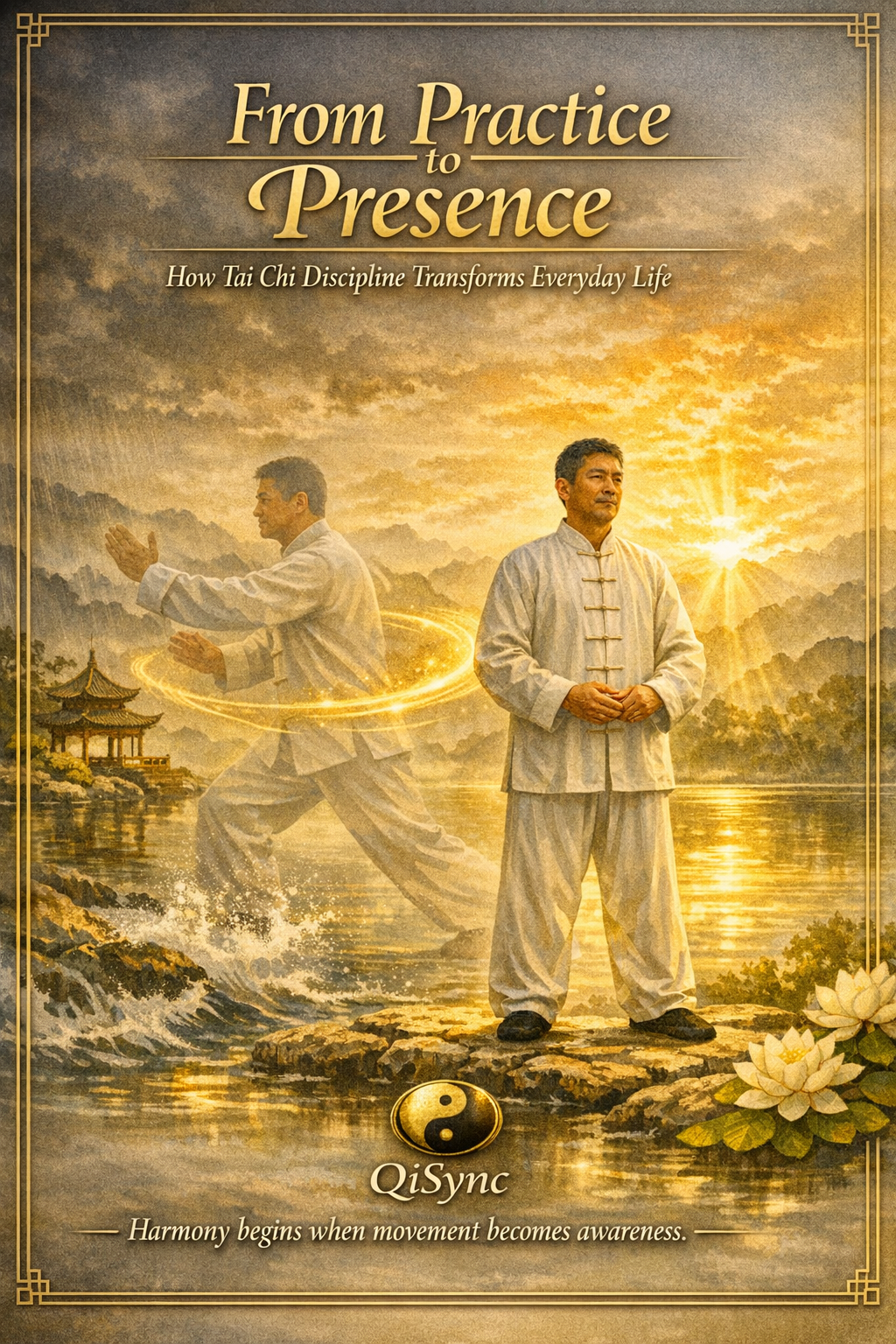
One of the most profound and least advertised benefits of disciplined Tai Chi practice is what it does to the rest of your life. Students who commit to regular training often report changes that extend far beyond physical fitness or flexibility — they begin to approach challenges differently, react less impulsively, and find stillness in situations that once triggered stress.
This is not accidental. Tai Chi is built on the principle of Wu Wei — effortless action, or the art of not forcing. In practice, this means learning to move without unnecessary tension, to yield rather than resist, and to find the path of least resistance through every transition. Over time, this way of moving becomes a way of thinking.
The Yin-Yang philosophy at the heart of Tai Chi teaches that every situation contains its opposite: stillness within motion, softness within strength, rest within effort. Practising this balance on the training floor gradually trains the mind to seek it in daily life. A person who has spent years learning to stay relaxed and focused in demanding stances develops real capacity for calm under pressure.
Mindfulness is another bridge between Tai Chi practice and daily life. The practice demands full attention to breathing, posture, weight distribution, and the quality of each movement. This cultivation of present-moment awareness does not stay on the practice mat. It begins to infuse everyday activities: eating, walking, listening, and working.
The discipline required to maintain a consistent practice also builds what psychologists call self-efficacy — the confidence that you can commit to something and follow through. Each morning you complete your practice, you reinforce the belief that you are someone who does what they set out to do. This carries into every other area of life.
Ultimately, Tai Chi offers more than a set of movements. It offers a philosophy for living — one that values patience over urgency, depth over speed, and presence over distraction. The discipline of practice is not separate from this philosophy. It is how the philosophy becomes real.