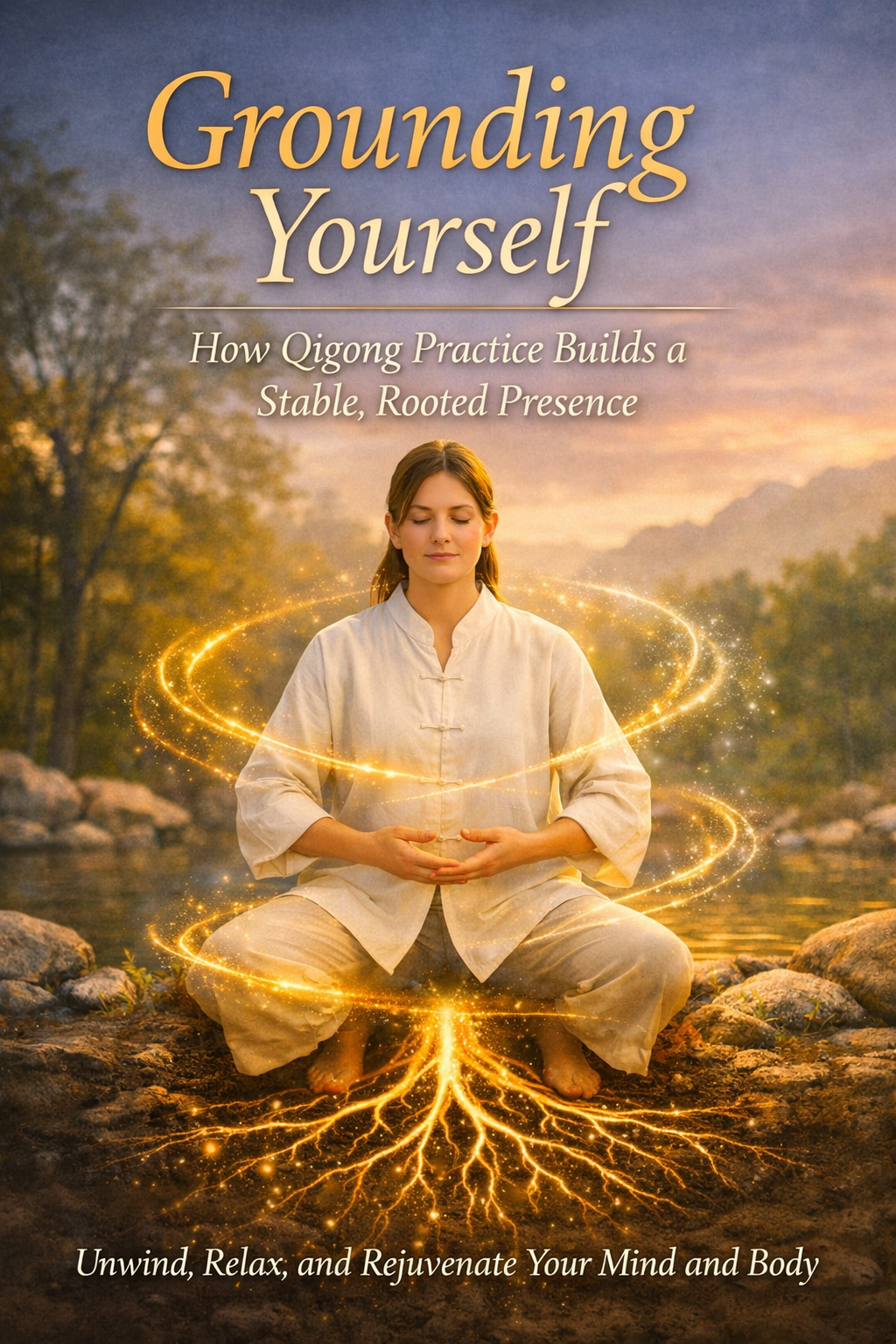
Grounding Yourself — How Qigong Practice Builds a Stable, Rooted Presence

There's a quality you notice in experienced Tai Chi and Qigong practitioners that's hard to put into words at first. They seem grounded. Settled. Present in a way that feels different from ordinary alertness. They're not tense or on edge, but they're not spaced out either. There's a quality of rootedness about them — as though they're genuinely at home in their own bodies. This quality doesn't come from personality or natural talent. It comes from practice, and it starts developing much sooner than most beginners expect.
In Chinese wellness tradition, the concept of grounding is deeply tied to the idea of connecting downward — into the earth, into the body's centre, into the present physical reality of where you are and what you're doing. The Dan Tian, that energy centre in the lower abdomen, is considered the body's gravitational centre, the place where presence and stability are anchored. When your awareness is gathered there, you feel solid. When you're scattered — living entirely in your head, racing through mental scenarios — you feel unstable, reactive, easily knocked off balance, both literally and figuratively.
The Wuji Stance is one of the first practices a beginner in Qigong encounters, and it's specifically designed to develop this grounded quality. Wuji means "without polarity" — it's a state of pure, open readiness before any movement begins. To practice it: stand with feet shoulder-width apart, toes pointing forward, knees softly bent. Your arms hang naturally at your sides. Your spine is gently lengthened — imagine a light pulling the crown of your head upward. Soften your gaze, relax your jaw, and breathe naturally into the lower abdomen.
As you stand in Wuji, something quietly remarkable happens. The nervous system begins to settle. The constant mental chatter that's so normal you might not even notice it starts to lose some of its urgency. Your weight drops down through your legs into the floor. You begin to feel the ground actually supporting you, which, of course, it always was, but you weren't feeling it before. This felt connection to the earth beneath you is the beginning of genuine grounding.
Grounding techniques in Qigong — the standing postures, the walking meditations, the slow weight shifts — cultivate a deep sense of calmness, stability, and connection. They train you to arrive fully in your body instead of hovering somewhere above it in a cloud of thoughts. For beginners who carry a lot of mental anxiety or restlessness, this can feel like a profound relief. It may be the first time in a long while that the body has felt like a safe, stable place to be. That stability, once experienced, becomes something you actively want to return to — and every Qigong session helps you get there a little more easily.