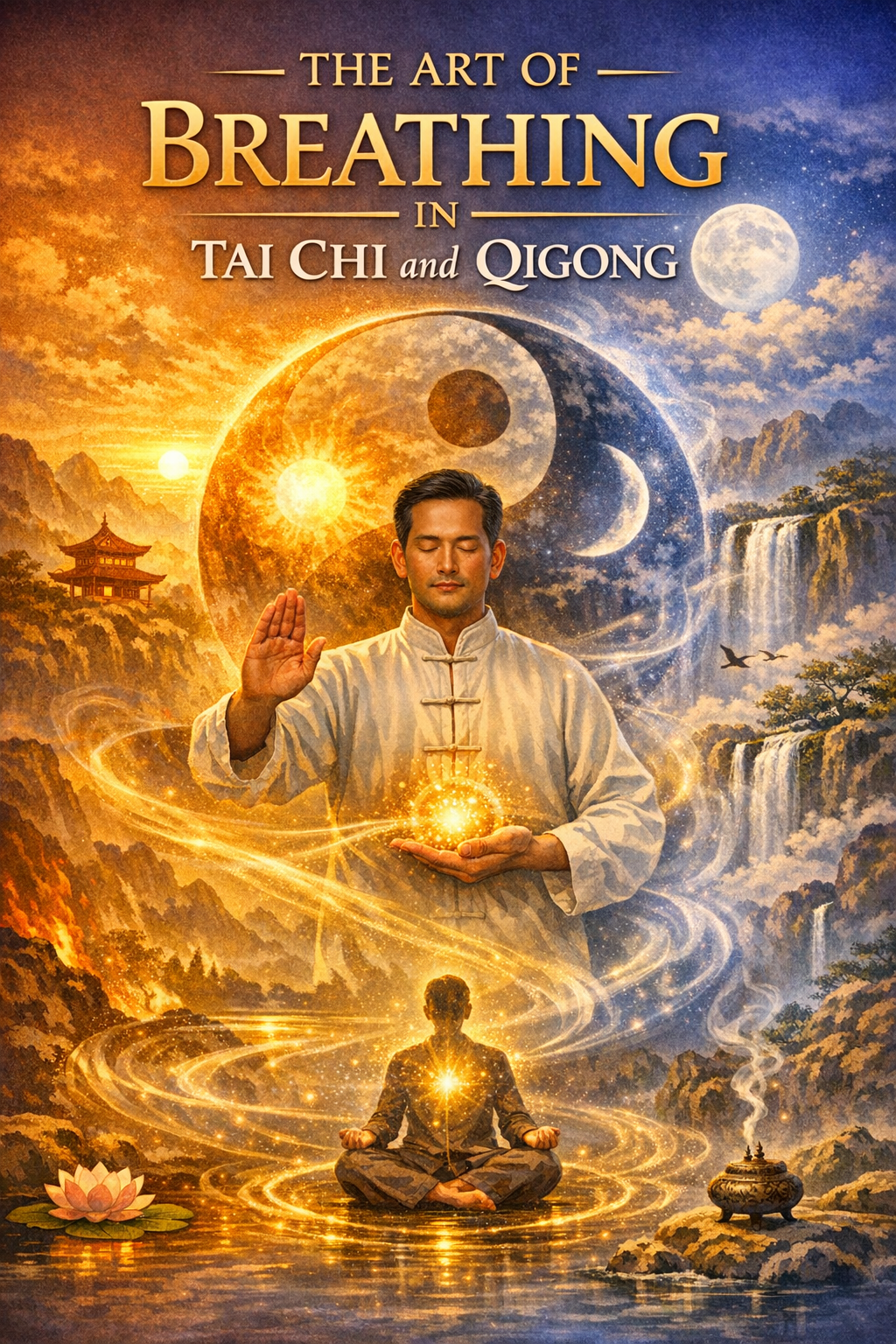
The Art of Breathing in Tai Chi and Qigong

Why Breathing Matters
In both Tai Chi and Qigong, breathing is not just a background function — it is a central component of practice. How you breathe directly affects the quality of your movements, the depth of your relaxation, and your ability to cultivate and direct Qi. Learning to breathe correctly is one of the most important skills a practitioner can develop.
Diaphragmatic Breathing
The foundation of Qigong and Tai Chi breathing is diaphragmatic breathing, also called 'belly breathing.' Rather than shallow chest breathing, this technique involves drawing air deep into the lungs by expanding the abdomen on the inhale and allowing it to fall on the exhale. This engages the diaphragm fully, increases oxygen efficiency, and activates the body's relaxation response.
Coordinating Breath with Movement
In Tai Chi and Qigong, breath and movement are coordinated intentionally. Generally, expansive or opening movements are performed on the inhale, while closing or contracting movements accompany the exhale. This synchronization deepens the meditative quality of practice and helps direct Qi through the body's energy pathways.
Breath Awareness as Mindfulness
Focusing on the breath is also a powerful mindfulness practice. When attention is placed on the rhythm and sensation of breathing, the mind naturally quiets. Distracting thoughts recede, and the practitioner enters a state of calm, focused presence. This mental clarity is one of the most valued outcomes of regular Tai Chi and Qigong practice.
A Simple Starting Practice
Begin by sitting or standing comfortably with a straight spine. Place one hand on your chest and one on your abdomen. Inhale slowly through the nose, feeling the belly rise. Exhale through the nose or mouth, feeling the belly fall. Practice this for five minutes daily, and observe how your stress levels, focus, and physical ease gradually improve.