The Mind-Body Connection — How Tai Chi Makes You More Aware of Yourself From the Inside Out

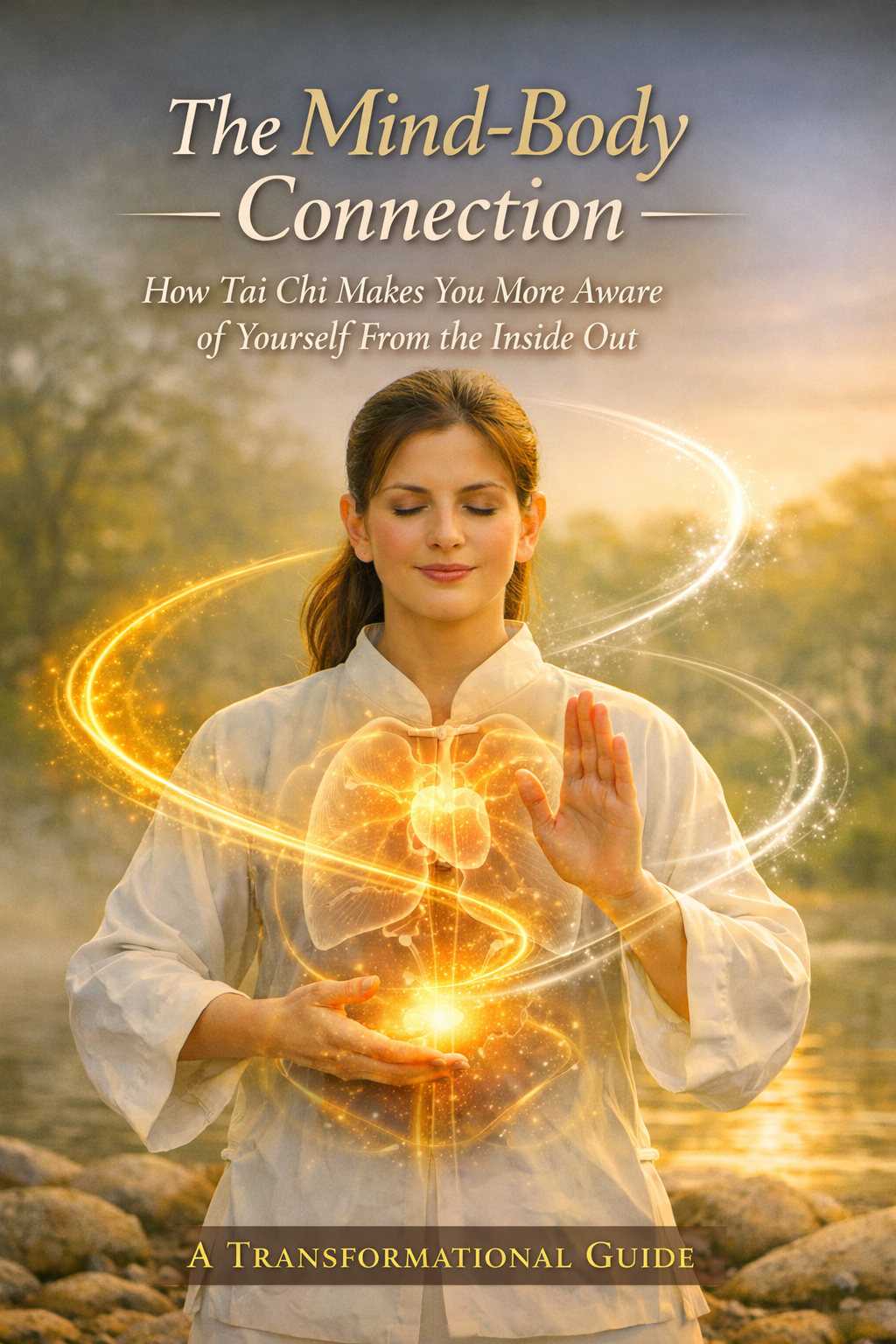
One of the most common things beginners say after their first few weeks of Tai Chi is some version of: "I didn't realise how disconnected I was from my body." It's a small but significant revelation. Most people navigate their entire lives without much felt awareness of what's happening physically from the inside — how they're holding tension, how their posture affects their mood, how their breathing changes when they're anxious. Tai Chi begins to change this, and the change happens quickly.
This heightened internal awareness has a technical name in movement science: proprioception. It refers to the body's sense of its own position, weight, and movement in space. Most physical activities develop basic proprioception — you learn not to trip over things, to catch your balance. But Tai Chi takes proprioceptive training to a much deeper level because the movements are specifically designed to demand fine, continuous attention to subtle internal states.
In Tai Chi, the slow, deliberate transitions require the practitioner to feel subtle shifts in weight, sense joint alignment, and detect where tension is held and where energy moves freely. This is not a skill that develops overnight, but even beginners start to notice small improvements quickly. After a few sessions, you'll begin to feel which shoulder you habitually hike up toward your ear. You'll notice when you're holding your breath without realising it. You'll feel the difference between a posture that's locked and stiff versus one that's aligned and relaxed. These are new forms of perception, and they genuinely enrich your experience of being in a body.
The Solo Form — the flowing sequence of postures that most people associate with Tai Chi — is a particularly rich arena for developing this internal sensing. Unlike partnered exercises or competitive sports, the Solo Form requires only you and your own awareness. There's no opponent, no ball to track, no external goal to focus on. Your entire field of attention is directed inward: Am I rooted? Is my weight fully in my back foot? Is the movement coming from my centre or from my peripheral limbs? This self-directed inquiry, practised repeatedly, builds what experienced practitioners describe as listening to the body — a quality of inner attunement that is both practically useful and deeply satisfying.
For beginners, this level of subtlety might feel distant at first. That's fine. The starting point is simply this: while you practice, pay attention to sensation. Not to how you look from the outside, not to whether you're doing it correctly according to some ideal, but to how it feels from the inside. The weight in your feet. The stretch across your chest. The quality of your exhale. Let sensation be your guide. This simple shift — from performing to sensing — is the doorway into the deeper dimensions of Tai Chi, opening the practice to something genuinely transformative.