The Relationship Between Tai Chi and Qigong

Two Practices, One Root
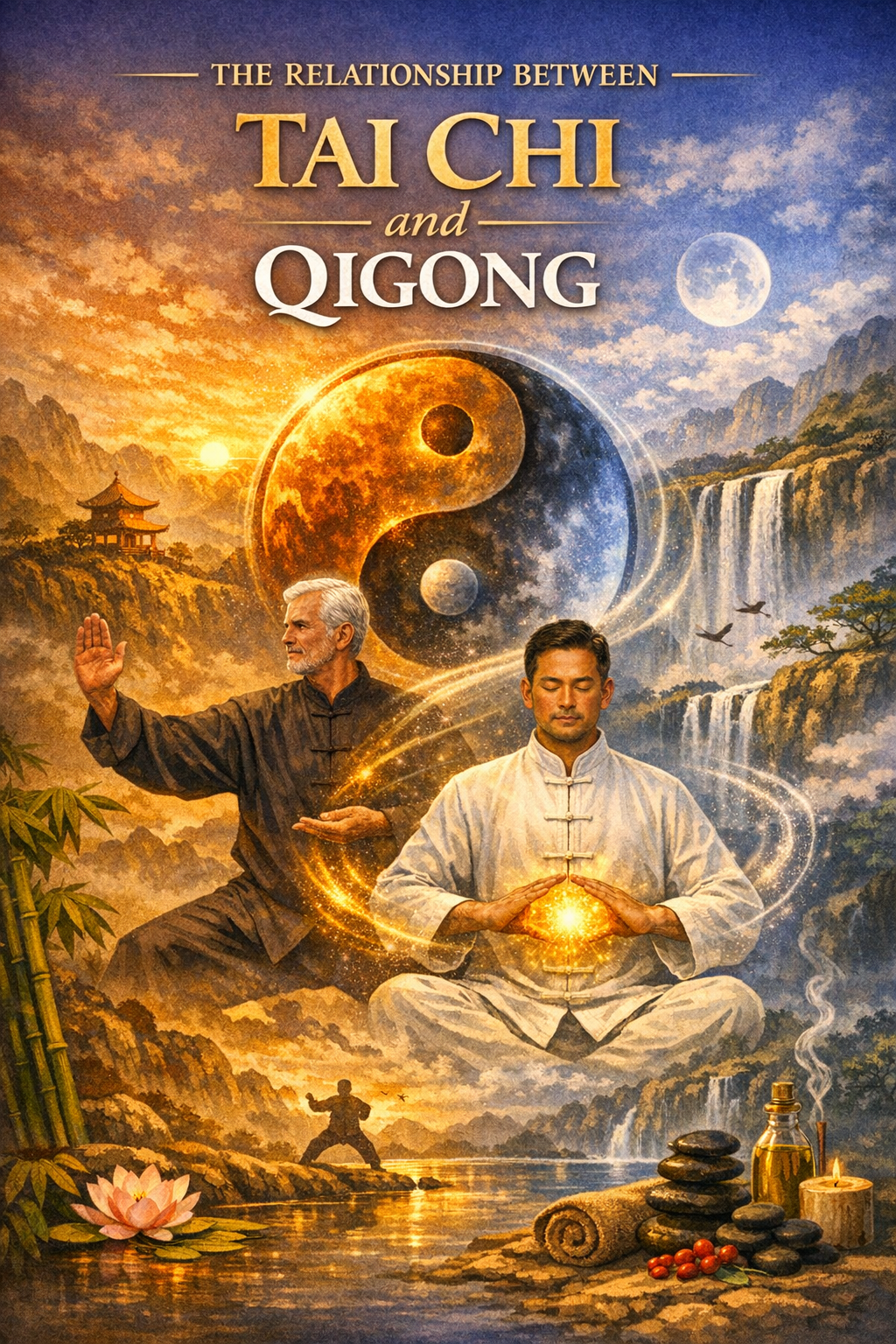
While Tai Chi and Qigong are often discussed separately, they share a deep common foundation. Both disciplines arise from Traditional Chinese Medicine and Taoist philosophy, and both use the coordination of breath, movement, and mental intention to cultivate Qi and promote well-being.
How They Differ
The most notable difference lies in complexity and form. Qigong tends to involve simpler, repetitive exercises that are easy to learn and practice independently. Tai Chi, on the other hand, features longer sequences of connected movements — called 'forms' — that require more time and guidance to master. Think of Qigong as foundational training and Tai Chi as its more advanced application.
Why Qigong Supports Tai Chi Learning
Qigong is an essential preparation for learning Tai Chi. It builds the correct posture, body alignment, and breathing habits that Tai Chi movements require. Without this foundation, practitioners often struggle to perform Tai Chi correctly or access its deeper health benefits.
Complementary Benefits
Practicing both disciplines together creates a powerful synergy. Qigong develops internal awareness and Qi cultivation, while Tai Chi provides a structured framework for applying those qualities in fluid, coordinated movement. Many experienced practitioners describe the combination as inseparable — one enriching the other.
A Unified Path to Health
Whether you begin with Qigong, Tai Chi, or both, you are stepping onto the same path. The shared goal is a body that moves with ease, a mind that stays calm and focused, and a life energy that flows freely. Both practices guide you toward this vision of balanced, vibrant health.