The Three Pillars of QiSync — Tai Chi, Qigong, and Meditation
An Integrated Trinity
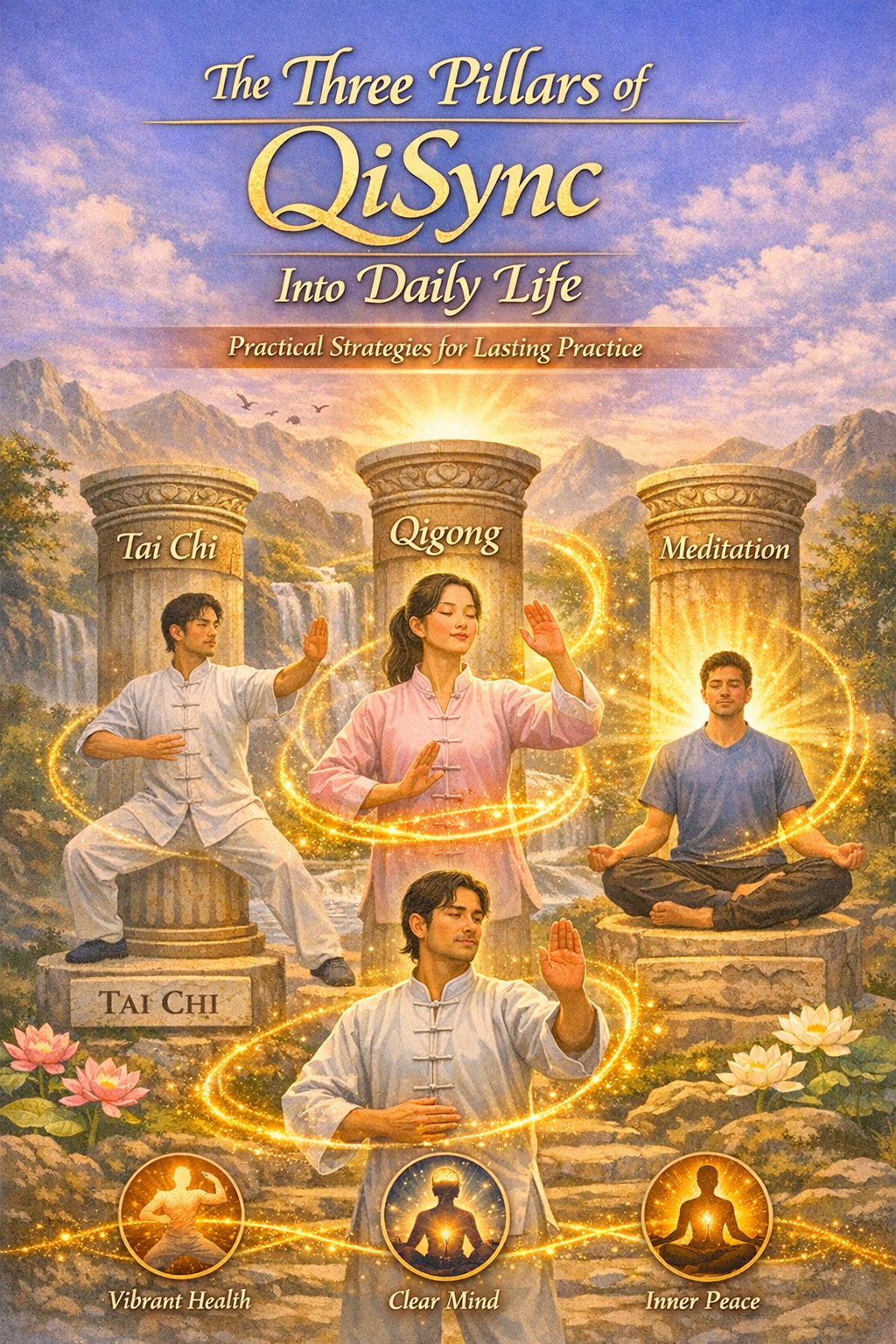
Understanding QiSync means understanding the unique contribution of each of its three foundational practices. Far from being redundant, Tai Chi, Qigong, and Meditation each bring distinct tools to the practitioner's journey. When practised together within the QiSync framework, they form a seamless, mutually reinforcing system of wellness.
Pillar One: Tai Chi — The Art of Moving Harmony
Tai Chi (Taijiquan) is a centuries-old Chinese martial art that, in its modern form, is practised primarily as a meditative movement exercise. Its philosophy is rooted in the concept of Yin and Yang — the dynamic balance of opposing forces that underlies all of nature. In Tai Chi, the practitioner learns to move with effortless fluidity, finding equilibrium in every posture and transition.
Within QiSync, Tai Chi serves as the movement foundation. Its gentle, flowing sequences train the body's balance, flexibility, coordination, and joint mobility. For older practitioners in particular, Tai Chi's emphasis on controlled weight-shifting and proprioception has been shown to significantly reduce the risk of falls and improve confidence in movement.
Proprioception is often described through four main components: joint position sense, which helps you know where your limbs are; kinesthesia, which allows you to feel movement; force perception, which helps you gauge how much pressure to use; and balance or postural control, which keeps your body stable and aligned.
Beyond the physical, Tai Chi is a moving meditation. By focusing the mind on the body's movements and breath, practitioners activate the parasympathetic nervous system — the 'rest and digest' state — which counteracts stress, slows the heart rate, and brings a deep sense of calm.
Pillar Two: Qigong — The Cultivation of Life Energy
Qigong translates directly as 'cultivating energy,' and this is precisely what the practice does. Through a combination of specific body postures, controlled breathing exercises, and mental intention, Qigong teaches practitioners to sense, direct, and strengthen the flow of Qi through the body's energy channels.
Unlike Tai Chi, which is typically practised in a set sequence of forms, Qigong is highly varied and flexible. It encompasses thousands of styles — from the famous Eight Brocades (Ba Duan Jin), a series of flowing exercises that target specific organ systems, to Standing Meditation (Zhan Zhuang), in which the practitioner holds a rooted stance to build internal energy and clarity.
In QiSync, Qigong provides the energetic dimension of practice. It enhances vitality, strengthens the immune system, and brings practitioners into direct relationship with their inner energy landscape. This makes it a powerful complement to both the physical movements of Tai Chi and the inward focus of meditation.
Pillar Three: Meditation — The Gateway to Inner Peace
Meditation is the thread that weaves through and unifies the entire QiSync system. It is the practice of turning attention inward — cultivating mindfulness, self-awareness, and equanimity amidst the fluctuations of thought and emotion.
QiSync draws on several meditation approaches, including mindful breathing (focusing on the natural rhythm of the breath), body-scan meditation (systematically bringing awareness to each part of the body), and loving-kindness meditation (cultivating compassion for oneself and others). Each technique strengthens the practitioner's capacity for presence, emotional regulation, and mental clarity.
Meditation also deepens the benefits of Tai Chi and Qigong by sharpening the internal awareness needed to truly feel and guide Qi. Without the meditative dimension, these physical practices risk becoming purely mechanical; meditation breathes consciousness and intention into every movement.
The Synergy of Three
The true power of QiSync emerges from the integration of all three pillars. Tai Chi grounds the practice in the body; Qigong energises and vitalises; Meditation illuminates the inner world. Practised together, they address the full spectrum of human health — physical, energetic, mental, and emotional — offering a depth of benefit that no single practice can achieve on its own.