What Is Qigong? Understanding the Foundations
Defining Qigong
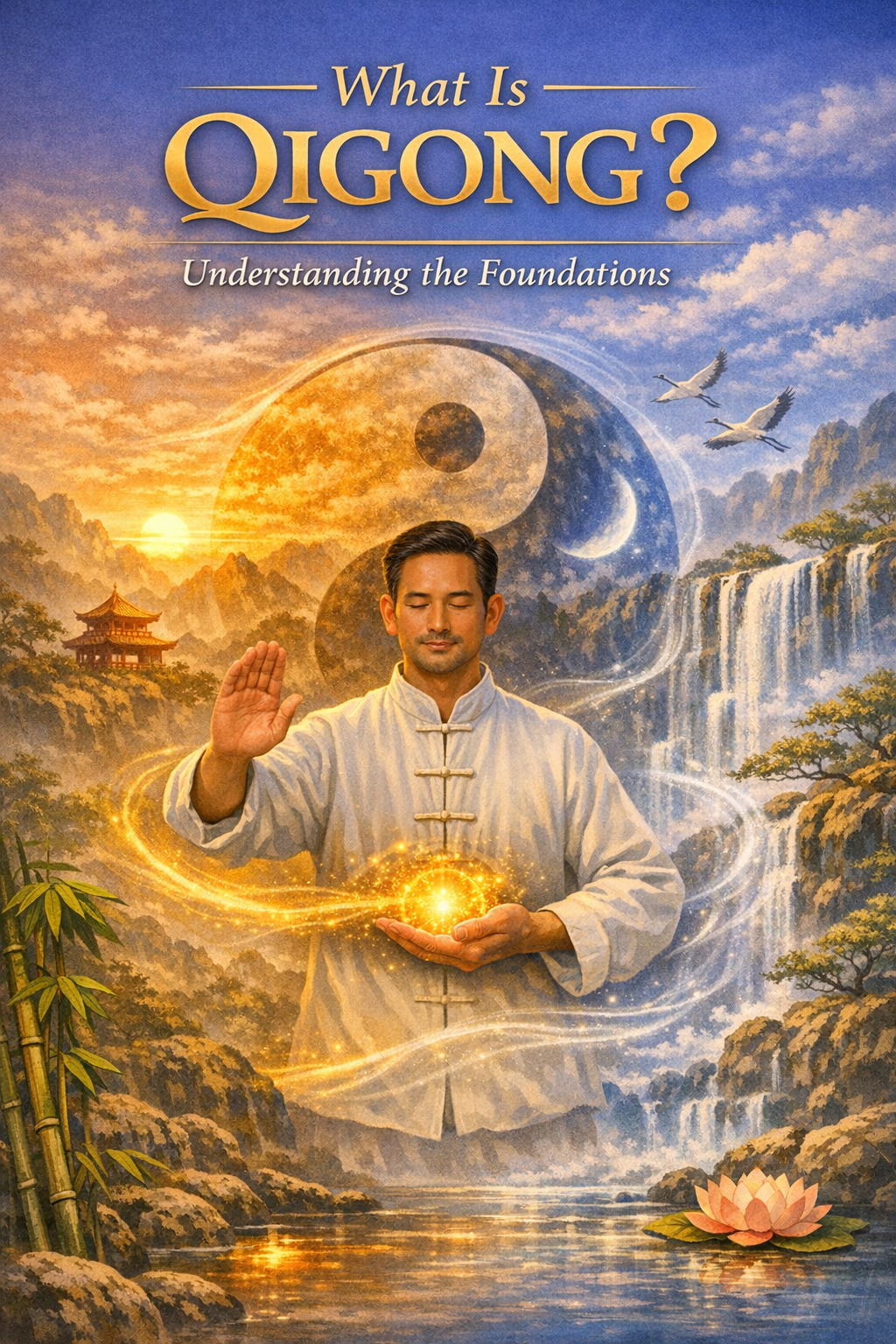
Qigong (pronounced 'chee-gung') is an ancient Chinese system of exercises and breath control designed to promote health and vitality. The word itself means 'energy work' or 'breath skill,' reflecting its focus on cultivating and balancing Qi — the life force that is believed to flow through every living being.
The Role of Qi
In Traditional Chinese Medicine and philosophy, Qi is the fundamental energy that sustains life. When Qi flows freely and harmoniously through the body, a person experiences good health and mental clarity. When Qi is blocked or depleted, illness and fatigue can follow. Qigong practices are designed to encourage the smooth flow of Qi, supporting the body's natural capacity for healing.
How Qigong Works
All styles of Qigong share three essential elements: intentional movement, focused breathing, and a meditative mental state. Movements are typically slow, gentle, and rhythmic, flowing smoothly from one to the next. Breath is deep and abdominal, coordinated with movement to enhance oxygen intake and calm the nervous system.
Types of Qigong
There are many different styles of Qigong, ranging from gentle seated exercises to more dynamic standing forms. Some styles focus primarily on health and relaxation, while others are designed to build internal energy for martial arts. Tai Chi itself is widely considered a form of Qigong, as it incorporates all the same foundational principles.
Getting Started
Qigong can be practiced by anyone, regardless of age, fitness level, or prior experience. A basic session can begin with as little as 10–15 minutes of gentle movement and breathing. Consistency is more important than duration — regular short sessions are more effective than infrequent long ones.