What Is Tai Chi? A Beginner's Introduction

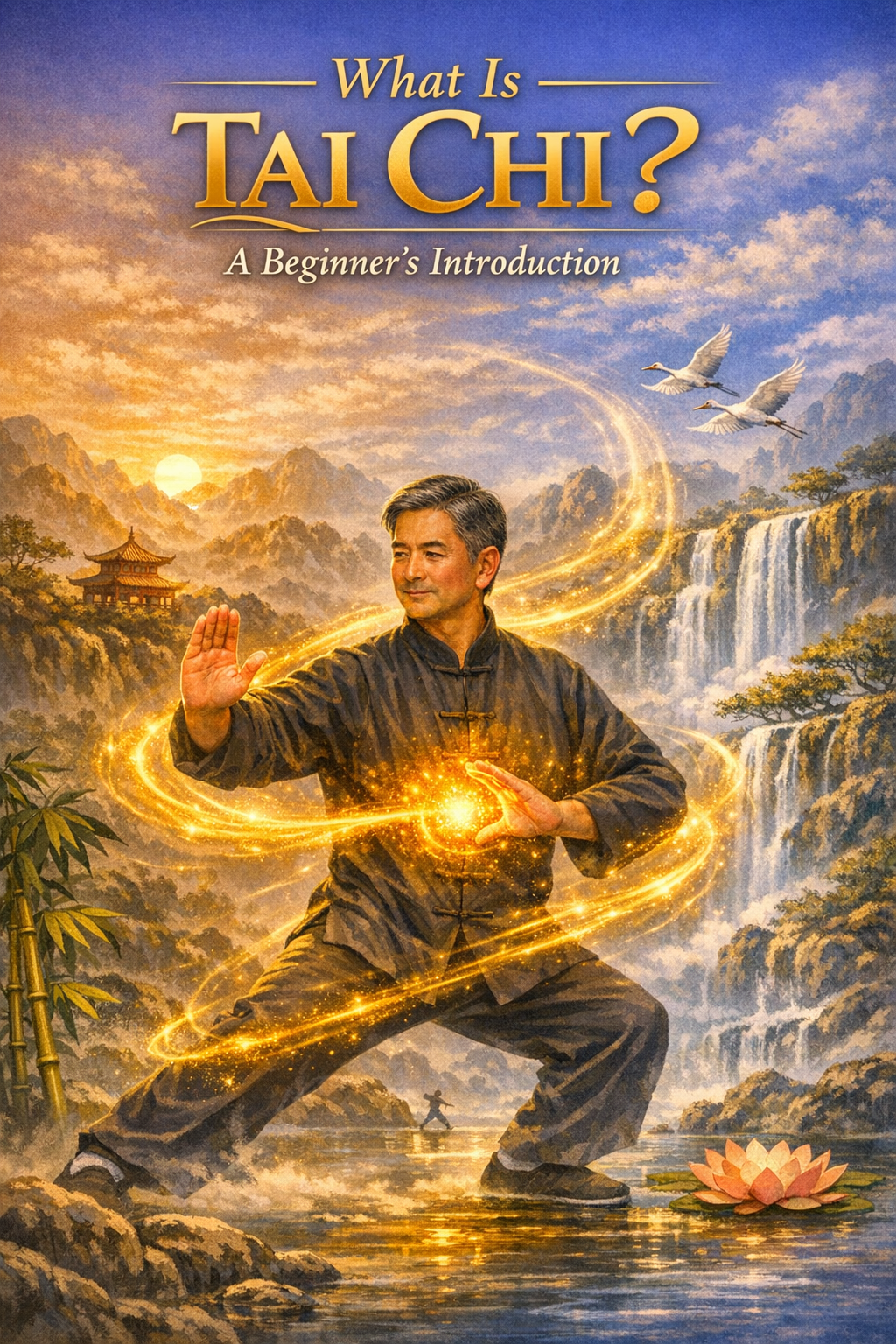
What Is Tai Chi?
Tai Chi Chuan — also written as Taijiquan — is an ancient Chinese practice that combines slow, flowing movements with deep breathing and mental focus. Originally developed as a martial art, it is practiced today primarily as a form of exercise that promotes physical health and mental well-being.
A Brief History
Tai Chi has roots dating back over 700 years, with some traditions placing its origins even further in history. It is credited to Zhang San Feng, a Taoist monk of the 13th century, who is said to have created it on Wudang Mountain. Over centuries, distinct family styles emerged — including Chen, Yang, Wu, and Sun styles — each with unique characteristics but all rooted in the same core principles.
The Meaning Behind the Name
The words 'Tai Chi Chuan' translate roughly to 'Supreme Ultimate Boxing.' As a health practice, it can be understood as 'Supreme Ultimate Exercise' — a system that uses breathing, visualization, and movement to work the entire body simultaneously. The Tai Chi Classics state: 'If one part of the body moves, the entire body moves.'
Core Philosophy
Tai Chi is built on the philosophy of Yin and Yang — two opposing yet complementary forces that create harmony. Every movement in Tai Chi reflects this duality: exhale and inhale, release and store, expand and contract. By practicing these balanced opposites in motion, practitioners develop both inner strength and outer softness.
Who Can Practice?
Tai Chi is suitable for people of all ages and fitness levels. Because the movements are slow and low-impact, it is especially popular among older adults seeking to maintain balance, flexibility, and vitality. No special equipment is required — only comfortable clothing and a willingness to learn.