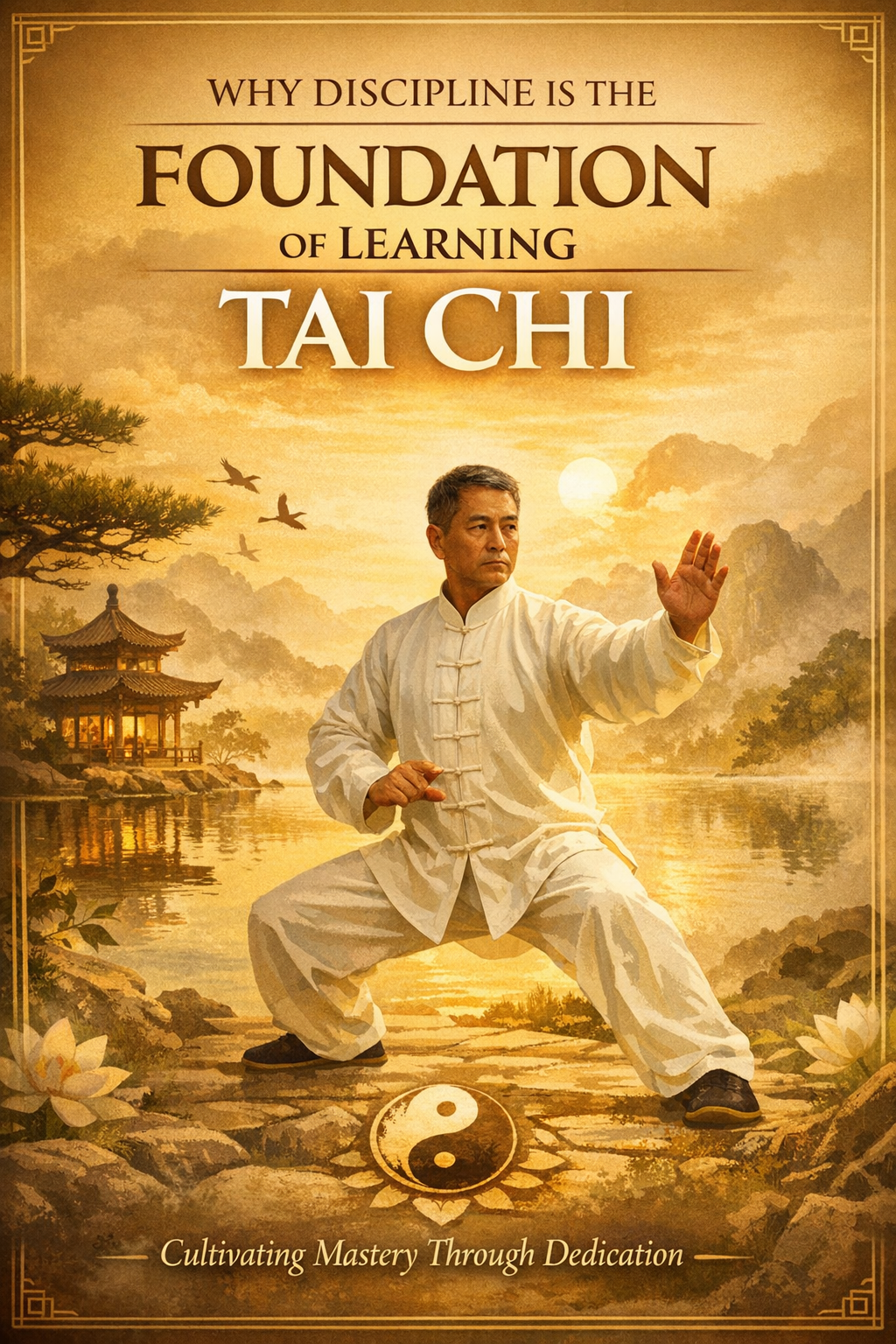
Why Discipline Is the Foundation of Learning Tai Chi

Tai Chi is often described as a moving meditation—a graceful, flowing art that appears effortless from the outside. Yet anyone who has tried to learn it knows that behind those smooth, unhurried movements lies something demanding: the need for real, consistent discipline.
Discipline in Tai Chi is not the harsh, military kind. It is the quiet commitment to showing up, day after day, and practising even when progress feels invisible. The ancient masters understood this well. They taught that Tai Chi cannot be rushed, purchased, or shortcut. It can only be earned through time and repetition.
For beginners, the challenge is often not the movements themselves but the mental adjustment required. Modern life rewards quick results. Tai Chi rewards patience. Learning to stand still in a Horse Stance for several minutes, or to repeat a single transition dozens of times until it feels natural, runs against the grain of a world that values speed over depth.
Discipline also shapes the quality of practice. A practitioner who trains for ten focused minutes every morning gains far more than someone who practices for an hour once a week when the mood strikes. The body learns through regularity. The nervous system builds new pathways through repetition. The mind develops concentration through consistent effort.
Starting a Tai Chi journey means accepting that discipline is not a burden — it is the very vehicle that carries you forward. Each day of practice, however brief, is a small deposit into a growing account of skill, balance, and inner calm. Over time, those deposits compound into something genuinely transformative.
The good news is that Tai Chi itself makes discipline easier. The practice is enjoyable, meditative, and deeply rewarding. Once the habit forms, practitioners often find that missing a session feels wrong — the body and mind begin to expect and crave the stillness and movement that Tai Chi provides.