Resilience Brings Inner Peace
Peace is not the absence of difficulty. It is the quiet confidence that, whatever happens, you can meet it, learn from it and return to centre.
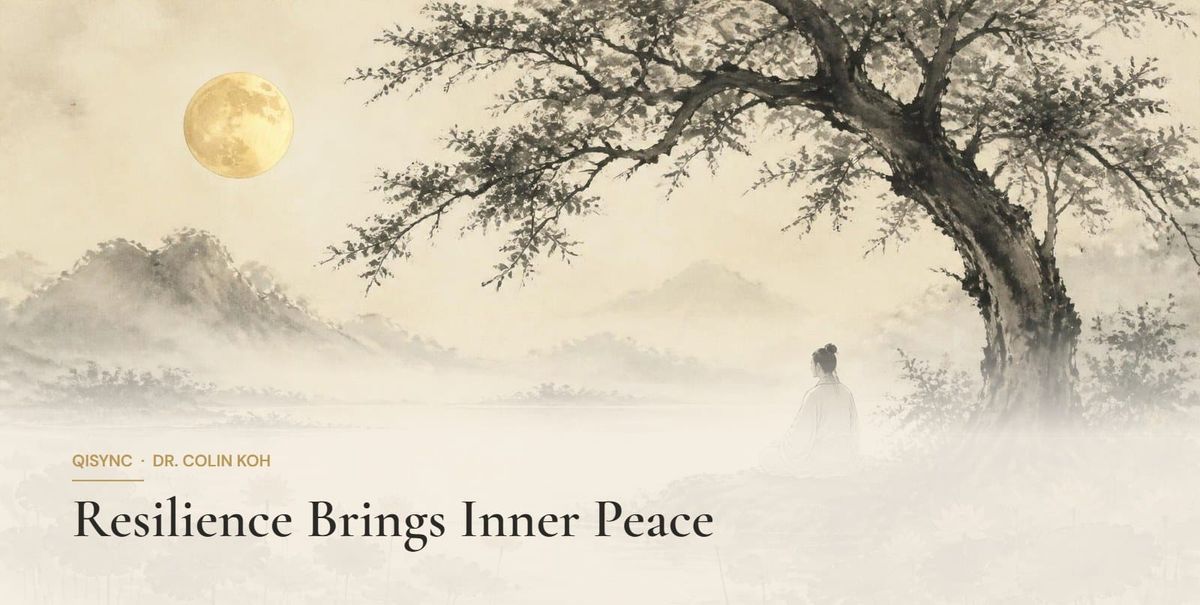
Life is unpredictable. For many of us, it remains something of a mystery. Yet that unpredictability is also part of its richness. The setbacks, the heartbreaks and the tears all play a role in shaping who we are. Even our most painful experiences have, in their way, produced stronger versions of ourselves. They build character, and they build resilience.
What Is Resilience?
Resilience is the ability to recover from, or adjust to, change and misfortune. It is the courage to rise above what life brings, however painful the experience. That courage grows from how we choose to see our challenges. We cannot always control what happens, but we have considerable influence over how we respond and how long we remain stuck.
Consider your own skin. However deep a cut or bruise, the body begins at once to repair itself. Healing is built into us. With practice, we can train the mind to follow the same pattern, and in doing so, find a deeper peace. Few things bring more inner calm than knowing you have done your best to work through the challenges that came your way.
Taking Ownership
“Accept responsibility for your life. Know that it is you who will get you where you want to go, and no one else.”
— Les Brown
Setbacks are opportunities to assess ourselves. They give us time to reflect on who we are, where we want to be and how to get there. Challenges expose our weaknesses so that we can strengthen them. There is a deep sense of peace in knowing that you can always return to the drawing board and revise your plan.
Seven Paths from Resilience to Peace
- Begin with acceptance. Take honest stock of where you are and what the hard times have brought. Peace begins when we stop arguing with our present circumstances and start finding a way to rise above them.
- Let go of the past. Do not obsess over setbacks. Look back only to draw strength and learning, then release the rest. Much of the stress people carry comes from holding on to old hurts and mistakes and letting them define the future. In Traditional Chinese Medicine, the capacity to let go is associated with the Lung system and its natural rhythm of release with each exhale.
- Cultivate a constructive outlook. After a failure or loss, the atmosphere you create around yourself matters. Stress finds a home where negativity is allowed to rule the mind.
- Release anxiety about the future. Do not spend your energy imagining everything that could go wrong. Quiet the voice of fear, calm your mind, and give your attention to what you can do now.
- Know yourself. Self-awareness is central to resilience. Understanding your strengths and limitations helps you navigate difficult terrain. You will not be on top of every situation, and that is perfectly acceptable.
- Focus on what you can control. Some events will happen regardless of our wishes. What we do next is within our control. Let go of outcomes you cannot influence, and peace follows naturally.
- Set realistic goals and stay flexible. Stretching yourself too thin invites frustration and stress. When a timeline slips, forgive yourself and press reset. Rigidity causes us to break under pressure; flexibility allows us to bend and recover.
Peace as Balance
The Taoist symbol of yin and yang reminds us that activity and rest, effort and release, are not opposites to choose between. They are partners in a single, balanced whole. Much of modern stress comes from living almost entirely in yang: constant striving, constant alertness, with too little yin, the restorative stillness that renews us.
Over many years in high-demand professional environments, I have seen how often capable people neglect that restorative side, and how quickly their resilience and peace of mind return once they reclaim it. In TCM terms, deep rest settles the Shen, the spirit housed in the Heart. A settled Shen is the physical expression of inner peace.
When to use it: at the close of the day, especially when your mind keeps replaying events or anticipating tomorrow’s problems.
Sleep Reset™ is a QISYNC practice designed to help you transition from the activity of the day into deep, restful sleep. It supports the release of accumulated tension, calms the Shen and restores the balance of yin and yang that modern life so often disturbs. Each night becomes an opportunity to let go, recover and wake with a steadier, more peaceful mind.
Building Strength for the Times Ahead
Knowing that you can recover from difficulty is itself a source of peace. Shift your focus away from what you have already endured and toward building the inner strength you will need for the seasons ahead. Cultivate your resilience patiently, and you will find that true inner peace is not something that happens to you. It is something you build.
Restore your balance each evening. Explore the QISYNC practice library and begin with Sleep Reset™, inner peace cultivated one restful night at a time.
This article is for general wellness education and is not a substitute for medical or psychological advice. Please consult a qualified professional for any health concerns.