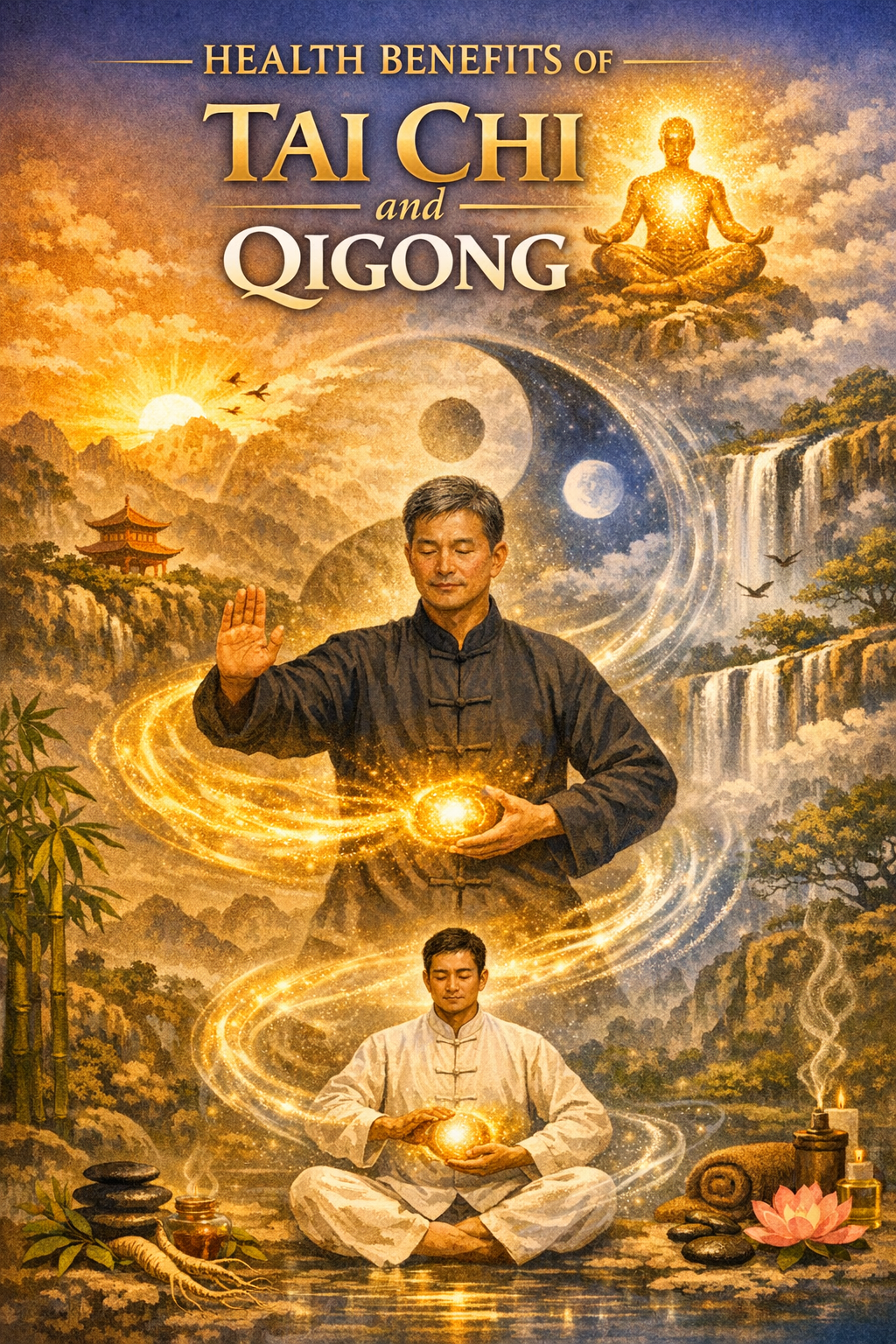
Health Benefits of Tai Chi and Qigong

A Holistic Approach to Well-Being
One of the most compelling aspects of Tai Chi and Qigong is the breadth of their health benefits. These practices work on the body, mind, and breath simultaneously, making them uniquely effective for overall wellness rather than targeting a single condition or fitness goal.
Physical Benefits
Regular practice has been shown to improve cardiovascular health, increase flexibility and range of motion, strengthen muscles — particularly in the core and legs — and enhance balance and coordination. For older adults, these benefits translate directly into a reduced risk of falls and improved functional independence.
Mental and Emotional Health
Tai Chi and Qigong are deeply effective for reducing stress, anxiety, and depression. The combination of slow movement, focused breathing, and present-moment awareness activates the body's relaxation response, lowering cortisol levels and calming the nervous system. Many practitioners report improved mood, greater emotional resilience, and a clearer, more focused mind.
Improved Sleep and Energy
Consistent practice supports better sleep quality and increased daytime energy levels. By regulating the nervous system and reducing stress hormones, Qigong and Tai Chi help the body enter a state of deeper rest at night and sustain greater vitality during the day.
Long-Term Commitment, Lasting Results
The health benefits of Tai Chi and Qigong are cumulative — they build over time with consistent practice. Even modest sessions of 20–30 minutes practiced three to five times a week can yield meaningful improvements in physical fitness, mental clarity, and overall quality of life.