Bouncing Back After a Setback
Setbacks are part of every meaningful journey. Whether they become turning points or stopping points depends on how we respond.
Setbacks are part of every meaningful journey. Whether they become turning points or stopping points depends on how we respond.
Life moves in seasons. Resilience is the courage to meet each one, prepared, present and grounded, without letting circumstances steal your joy.
Peace is not the absence of difficulty. It is the quiet confidence that, whatever happens, you can meet it, learn from it and return to centre.
Quitting keeps us behind the wall. Persisting is how we find out what lies beyond it, and who we are capable of becoming.
Mental strength does not come from pretending to have no weaknesses. It begins with honest self-awareness and grows through kindness, practice and a willingness to be uncomfortable.
Resilience is not a rare gift. It is a learnable skill, cultivated through perspective, honesty, connection, adaptability and purpose, and supported by a well-rested body.
Most of our hardest battles are fought within. Learn to steady the inner world, and the outer one becomes far easier to face.
Persistence is not a gift handed to a fortunate few. It is a way of thinking, and of moving, that anyone can cultivate one step at a time.
Success rarely belongs to those who avoid setbacks. It belongs to those who learn to bend, adapt and return to the path.
Why the people who reach their goals are rarely the most gifted, and how a steady mind and a regulated body carry you through the hard stretches.
Knee discomfort can change how you walk, stand, sit, and move through ordinary routines. The knee is part of a larger movement system Knee pain can make simple activities feel harder than they should. Walking across a room, climbing stairs, standing up from a chair, or exercising may become something
Understanding possible contributors helps you choose a safer and more suitable plan. Knee discomfort does not always have one cause Knee discomfort may appear suddenly after a twist, fall, or hard training session. It may also build slowly over weeks or months. Common contributors include reduced strength around the thigh,
Strength works best when it is matched with control, comfort, and gradual progress. The knee depends on nearby muscles The muscles around the hips, thighs, and calves help guide the leg when you walk, squat, climb stairs, or change direction. When these muscles are weak, tired, or poorly coordinated, the
Stairs reveal how the knee, hip, ankle, and muscles work together under load. Why stairs can feel different Climbing stairs places more demand on the knees than walking on flat ground. The body must lift or lower weight through one leg while the hip, knee, ankle, and foot coordinate the
Good alignment is about comfortable control, not forcing the knee into a rigid position. Alignment is dynamic Knee alignment describes how the knee moves in relation to the hip, ankle, and foot. During walking, squatting, stepping, and changing direction, the knee should be controlled rather than collapsing inward or moving

Mobility in the hip, ankle, and knee can influence how stress is shared during movement. Mobility helps the body share movement Mobility is the ability to move a joint through an appropriate range with control. If the ankle, hip, or knee is stiff, the body may compensate somewhere else. For
Small changes in walking can reveal how the body is protecting or compensating. Pain can change your walking pattern Walking is one of the most common daily activities, but it can become stressful when the knee is painful. People may shorten their steps, limp, avoid putting weight on one leg,
Knee improvement is easier to sustain when the plan respects capacity, recovery, and symptoms. Doing too much too soon can backfire Many people want quick results when knee pain gets in the way. It is understandable to want to return to normal activity as soon as possible, but sudden jumps
Small daily choices can influence how the knee feels between workouts and appointments. Daily routines matter Knee comfort can be influenced by more than formal exercise. Long periods of sitting, sudden increases in walking, poor sleep, inadequate recovery, repetitive movements, and unsuitable footwear may all affect how the knee feels.
Some symptoms should not be managed with exercise alone. Not all knee pain should be self-managed Some knee discomfort improves with rest, appropriate movement, and gradual return to activity. However, professional assessment is important when symptoms are severe, persistent, worsening, or linked to an injury. Trying to push through
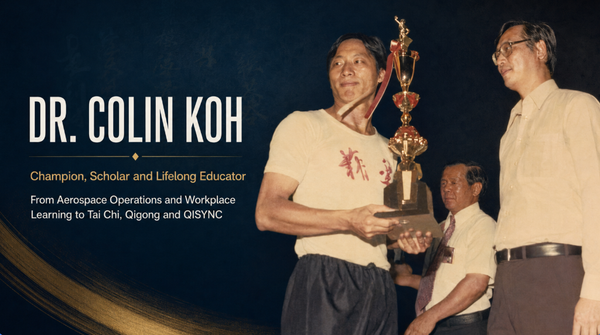
Colin Koh DR. COLIN KOH DBA, PhD • Founder of QISYNC Champion • Educator • Engineer • Mind–Body Practitioner Receiving the 1981 Singapore National Tai Chi Tui Shou Champion Trophy from Mr Goh Chok Tong Synchronize Within. Flourish Beyond. 内在和谐,向外绽放。 Profile at a Glance 个人简介概览 Dr. Colin Koh is the Founder of
Managing fatigue effectively requires a fundamental shift in how we view the body. Instead of thinking of our bodies as machines that simply need more rest or downtime, it’s more accurate and helpful to see the body as a complex system that requires consistent “re-calibration.” This re-calibration
When chronic stress keeps the body in a state of high alert, recovery requires more than just rest—it demands deliberate and systematic release of physical tension. One effective method to achieve this is through the "Head-to-Toe" body scanning technique. This practice offers a structured way
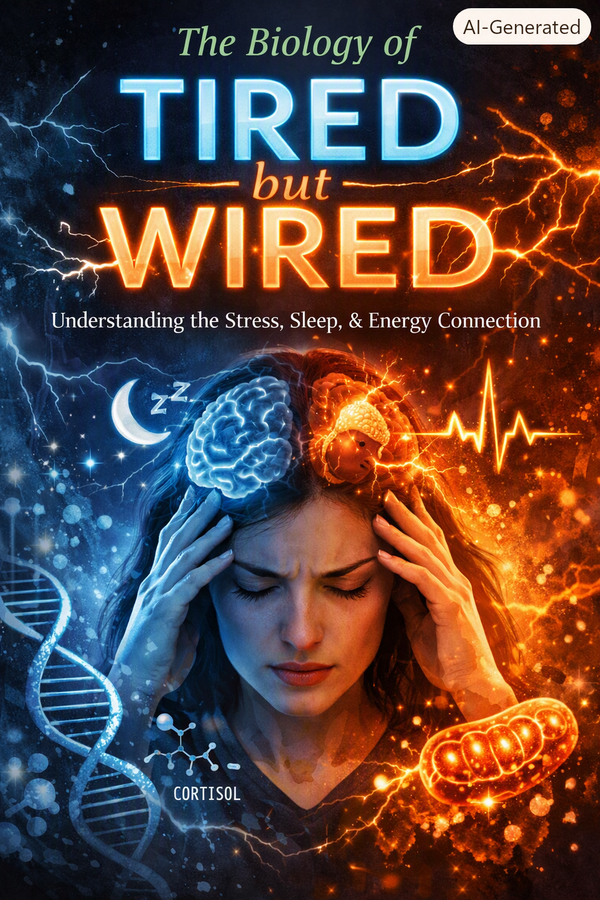
True rest remains elusive for many because we misunderstand the biology of fatigue. It is rarely about a lack of sleep; rather, it is often a symptom of a nervous system trapped in a state of high alert. When your sympathetic nervous system stays perpetually activated, your body continues to